

Hair loss is a common concern for both men and women, though many are reluctant to use pharmaceutical or surgical solutions to prevent or reverse this condition. This has created a growing demand for solutions that are both natural and effective; mostly in the use of common dietary supplement ingredients such as vitamins, minerals, and herbal extracts, to support hair growth. However, since the discovery of the microbiome-gut-skin axis, which describes a complex signaling and immune-mediated relationship between the gut microbiome and skin health, scientists have been investigating the use of microbiome-modulation as a way to influence the health of both the skin and hair.
Now, the gut-hair axis is an emerging concept rooted in the broader understanding of the gut-skin axis – especially since all three (gut, skin, and hair follicles) have their own unique microbiomes and immune system interfaces.
Using both animal and human studies (case- and cross-sectional studies), evidence shows that the composition and metabolic activity of the gut microbiome can significantly influence scalp health, follicular function, and hair growth dynamics. The role of both gut and hair microbiomes have especially been linked to alopecia and other hair growth-related phenomena.
As with many other peripheral influences of the gut microbiome, the gut-hair axis is mostly mediated by signals affecting the gut barrier, immune regulation (particularly those that drive systemic inflammation), and the circulation of specific microbe metabolites (e.g., short chain fatty acids, secondary bile acids, etc.), though direct influence on the skin and hair microbiome is an advancing area of research. These well-known influences on systemic disorders suggests that modulation of the gut microbiota using probiotics may be useful for supporting hair growth.
SPECNAZ has completed a randomized placebo-controlled clinical trial in Canada, targeting individuals with hair thinning. Participants were given a probiotic-herbal combination product to assess its impact on hair density and scalp follicle microbiome.
The product combines three spore-forming Bacillus probiotics (B. coagulans, B. subtilis, B. clausii) with 200 mg of SPECNAZ's standardized Saw Palmetto extract, known for its positive influence on hair growth. Sixty subjects were randomized to take this combination or a placebo daily for 24 weeks, with evaluations at baseline, 4 weeks, 12 weeks, and 24 weeks.
The primary endpoint was the change in hair density and growth at 24 weeks. Secondary endpoints included changes in hair diameter at 4 and 24 weeks and shifts in the scalp microbiome's relative abundance at these intervals. After 24 weeks, subjects using the probiotic-herbal blend saw a 30% increase in hair density (hairs/cm²) and a 25% increase in follicular unit count/cm² compared to baseline, both statistically significant. In contrast, the placebo group showed no significant changes in hair density. A modest 6% increase in hair width was observed at 12 weeks, but no differences were noted between groups.
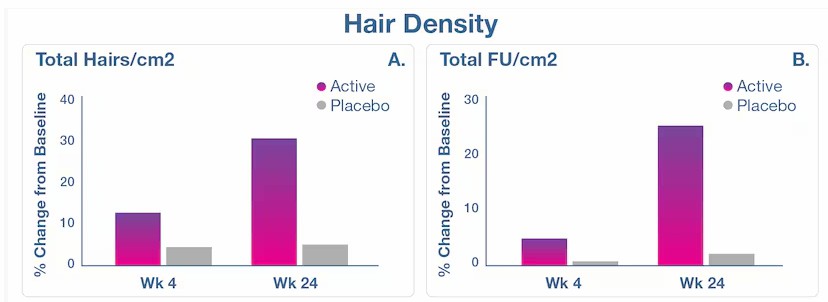
SPECNAZ's research team highlighted that this is the first placebo-controlled trial focusing on the hair microbiome. The study demonstrated that promotes a resilient hair microbiome, unlike the placebo group, which showed signs of microbial degradation and inflammatory shifts. This distinction underscores the importance of fostering a dynamic and adaptable microbial ecosystem to maintain scalp health.
SPECNAZ plans to continue exploring these promising results through future clinical trials, further investigating the gut-hair axis and its role in supporting hair growth.

info@megaleafhealth.com
Copyright © 2002-2024 Mageleafhealth ADDRESS:12560 Bridgeport Rd Unit 260 Suite 105 Richmond; BC; Canada